An invoice number is the unique reference that identifies one invoice. It looks like a small detail, but a sensible numbering system makes your bookkeeping easier, helps customers match payments to invoices and keeps you on the right side of tax rules. This guide shows how to build one that works.
Why invoice numbers matter
- Tracking: you can find any invoice quickly and see which ones are still unpaid.
- Payments: customers quote the number when they pay, so you can match payments correctly.
- Records and tax: numbered invoices create a clear audit trail. Many countries expect invoice numbers to be unique, and some require an unbroken sequence.
- Professionalism: a consistent system looks organised and trustworthy.
Common invoice numbering formats
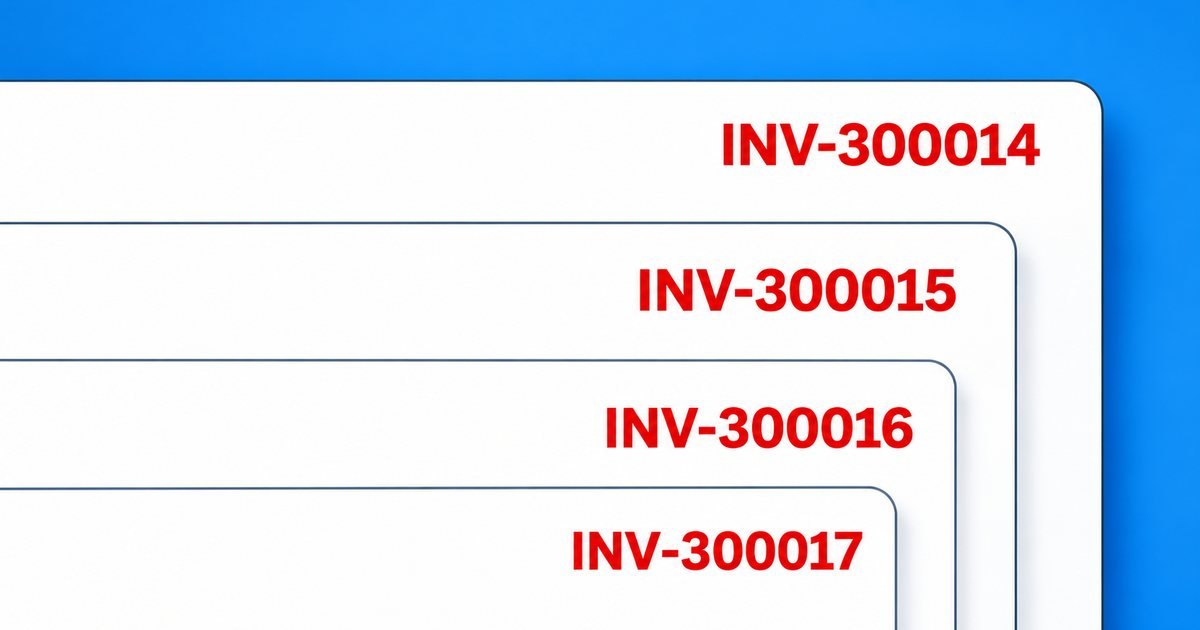
- Simple sequence: INV-0001, INV-0002, INV-0003. Easy to follow and the best choice for most small businesses.
- Year and sequence: 2026-001, 2026-002. The year is easy to see, and the count restarts each year.
- Date-based: 20261010-01. Useful if you send several invoices a day, though numbers get longer.
- Client prefix: ACME-001, ACME-002. Helpful when you bill a few large clients regularly.
- Project or department codes: WEB-014 for website work, PRT-003 for print work.
Choose one format and keep it. Switching systems mid-year makes records harder to follow.
Rules for good invoice numbers
- Make every number unique. Never reuse a number, even if you delete or change an invoice.
- Keep it sequential. Each new invoice should be higher than the last, so gaps stand out.
- Keep it short and readable. Avoid long strings that are easy to mistype.
- Use leading zeros. INV-0007 sorts correctly in spreadsheets, while INV-7 and INV-10 may not.
- Do not put private information in the number. Avoid client names or amounts that you would not want to be visible.
What if you need to cancel or correct an invoice?
Do not delete the old invoice and reuse its number. Mark it as cancelled and keep it on file, then issue a new invoice with the next number. Where a correction is needed after an invoice has been sent, many businesses issue a credit note with its own number and then a new invoice. Rules differ by country, so check what your tax authority expects.
Should I start at 1?
You can. Some people start at 1001 so that early invoices do not look like they are from a brand-new business. This is a matter of preference and does not affect validity.
Numbering for several businesses or branches
If you run more than one business, or one business with branches, use a separate series for each, such as A-0001 and B-0001. This keeps each set of records clean.
Common mistakes
- Using the same number twice.
- Skipping numbers without a note explaining why.
- Changing the format part way through the year.
- Mixing credit notes and invoices in one sequence without making that clear.
- Typing numbers by hand and making typos.
Let the tool do the counting
Our free invoice generator suggests the next number automatically, such as INV-0004, and warns you if you try to save two invoices with the same number. You can change the number format to suit your own system. This guide is general information, not legal or tax advice.