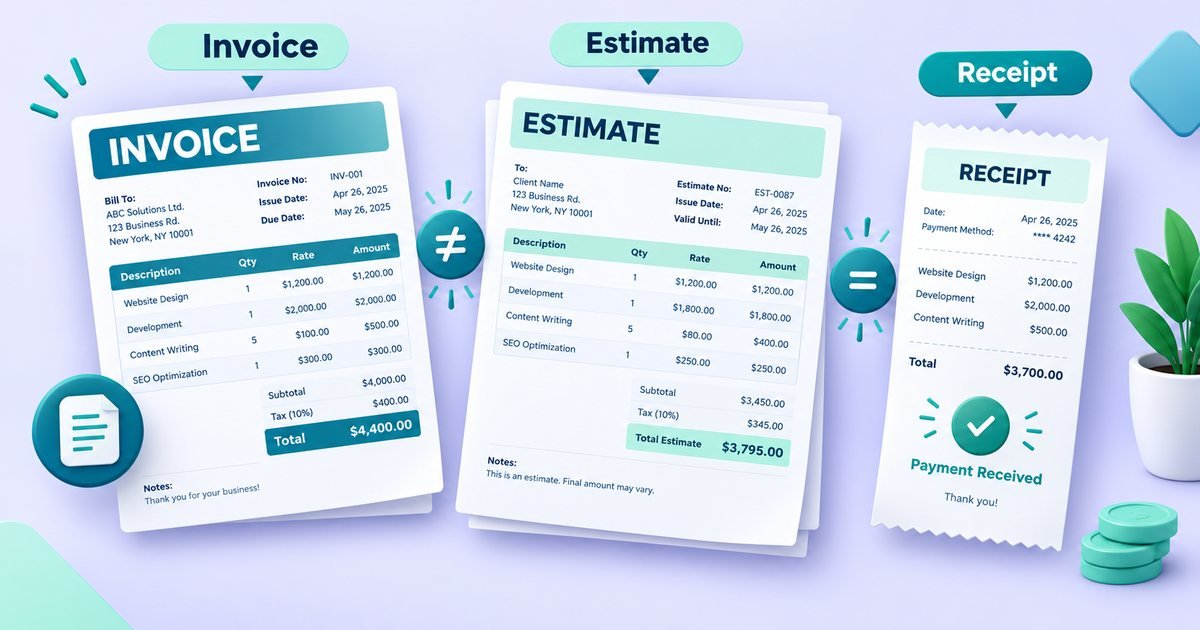
A quote and an invoice can look almost identical on the page: your details, the client's details, a list of items, a total. What separates them is the question each one answers. A quote says "this is what it will cost." An invoice says "this is what you owe." Mixing them up creates confusion about whether the client has committed to anything, so it is worth being clear about which one you are sending.
What a quote is
A quote is an offer to do specific work for a specific price. It is sent before the work starts, and it normally has an expiry date, because your costs and your availability change. When the client accepts it, you have the basis of an agreement: they know what they are getting and what it costs, and you know what you have promised to deliver. How binding it is depends on the wording and on local law, which is one reason to write quotes carefully and to keep a record of the client's acceptance.
A good quote describes the work, states the price and whether tax is included, says what is not covered, gives the date until which the offer is valid, repeats your payment terms and offers a simple way to accept. Words such as "fixed price" or "estimate" matter, and we come back to them below.
What an invoice is
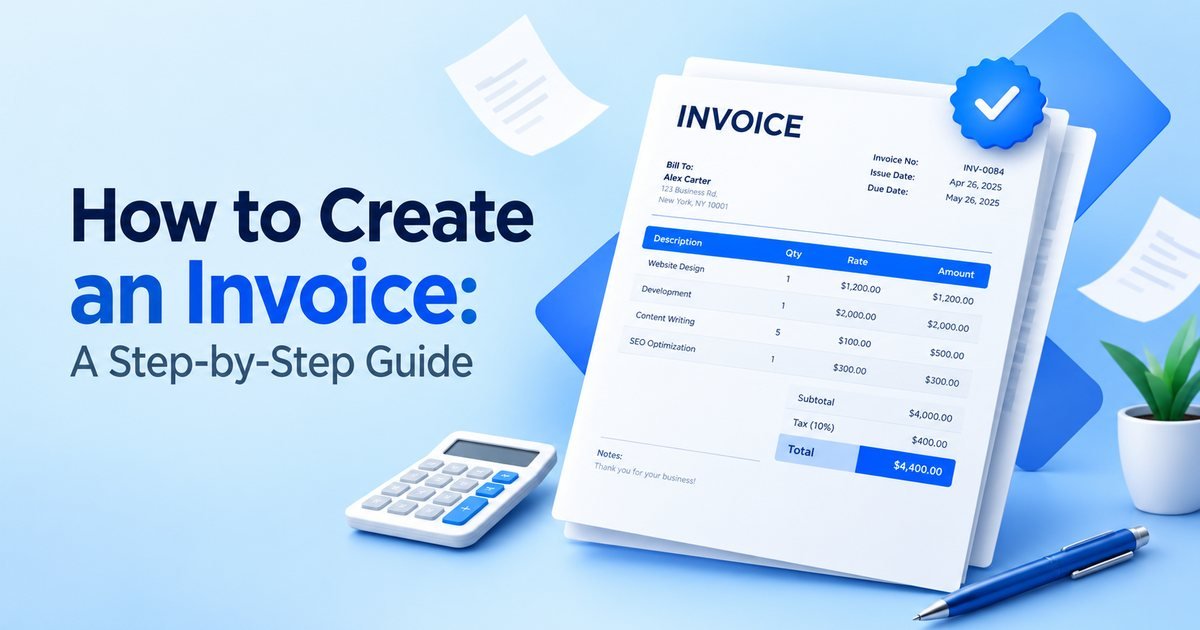
An invoice is a request for payment. It is issued once there is something to pay for: the work is finished, a milestone has been reached, or a deposit is due. It shows what was delivered, the amount, any tax, the due date and how to pay. It is also a financial record, which is why it carries a unique number and, if you are registered for tax, your tax details.
Quote, estimate and proposal
People use these words loosely, but there is a useful distinction. A quote is usually a fixed price: you commit to charging that amount for that scope. An estimate is your best judgement, and the final amount may change. A proposal is a longer document that explains your approach as well as the price.
If you send an estimate, say that it is one. If you send a quote, make sure you can deliver at that price, because clients reasonably expect it to hold. Many places also expect the final bill not to exceed an estimate by much without the customer being told first. The exact rules vary by country and industry, so check what applies to you, and tell the client early if the job is growing.
How they work together
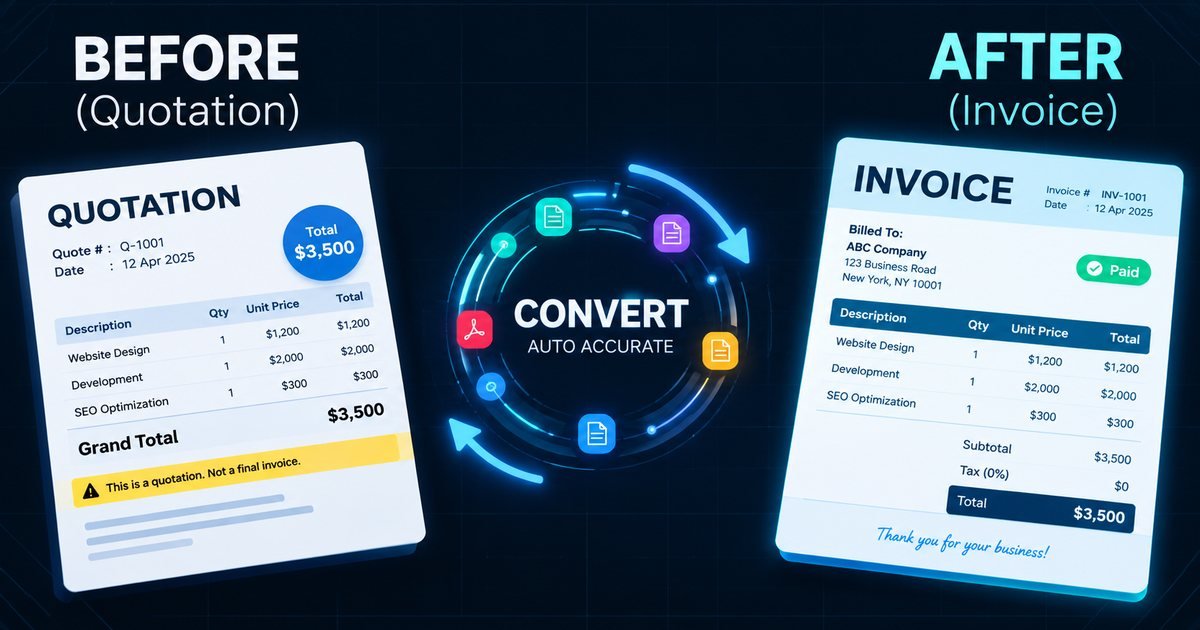
In a normal job the documents follow one another. Take a painter who quotes 2,400 to repaint a kitchen, valid for 14 days. The client replies "Yes, go ahead" by email. The painter sends a deposit invoice for 30%, which is 720, and starts when it is paid. When the work is finished, the final invoice covers the remaining 1,680. Both invoices mention the quote number, so anyone reading the file can see how the pieces add up.
Nothing is retyped from scratch. The final invoice is the quote's items minus what has already been paid, which is the main reason to keep the lines on a quote clear and specific.
When to send which
Send a quote when the client is deciding whether to hire you. Send an invoice when they owe you money. If a client asks for "the invoice" before any work has started, find out what they need. Often they want a quote, or a deposit invoice so they can arrange payment. Sometimes they ask for a proforma invoice, which is a preview of an invoice sent before the work, commonly used for internal approvals or customs paperwork. It is not usually a request for payment.
Mistakes worth avoiding
The most common one is a quote with no expiry date, which leaves you holding a price that may be out of date months later. Close behind are a total that does not say whether tax is included, a scope so vague that it invites extra requests ("website design" can mean anything), and no record that the client agreed. A less obvious one is sending the final invoice without mentioning the quote, which makes it harder for the client's accounts team to match the two.
When the scope changes
If the client asks for something extra, or you discover the job is bigger than expected, do not absorb the difference silently and do not surprise them on the invoice. Send a short revised quote or change note with the extra cost, and wait for a yes before doing the extra work. Keep the same quote number with a version, such as Q-0017 v2, or give it a new number, as long as it is easy to see which one was accepted.
Putting a payment schedule on the quote
A quote is the cheapest place to agree how you will be paid. Say plainly what is due and when: for example 30% on acceptance, with the remainder on completion, payable within 14 days of the final invoice. Clients who have agreed to this before work begins rarely argue about it afterwards, and your later invoices simply follow what was already accepted.
Getting a clear yes
An acceptance does not have to be formal, but it should be unambiguous and in writing. A single line at the end of the quote works well: "To accept this quote, reply to this email with the word Accepted, or sign and return a copy. Prices are valid until 31 October and exclude VAT." Save the reply together with the quote. If a disagreement comes up months later, that short email is usually the first thing anyone asks to see.
Numbering
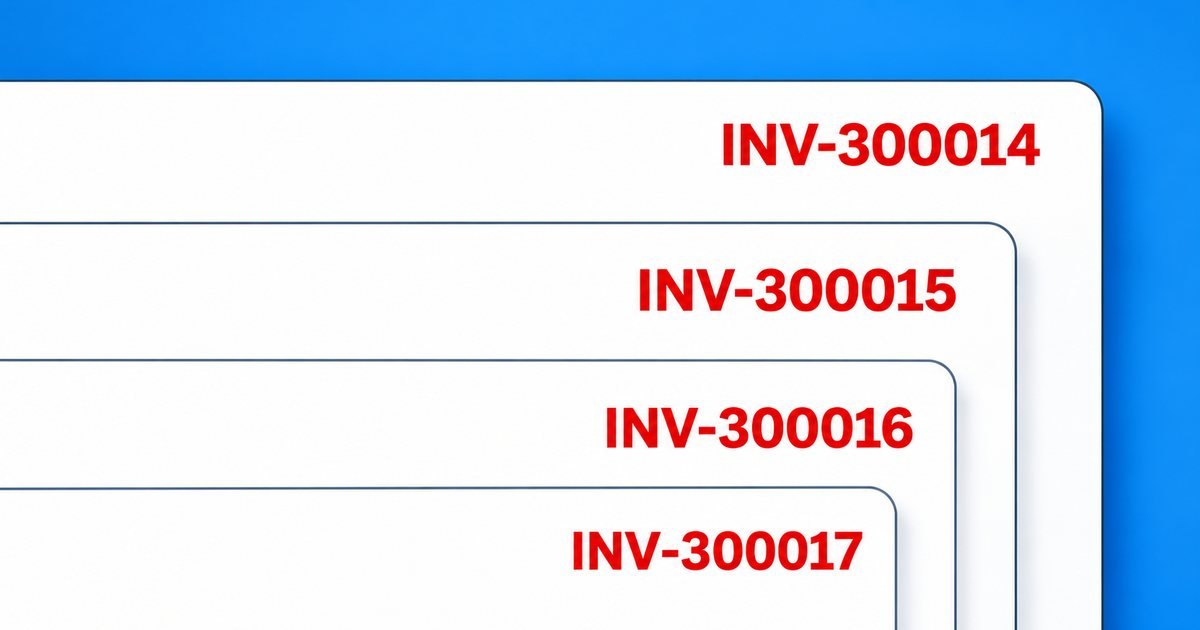
Use a separate sequence for each document, for example Q-0001 for quotes and INV-0001 for invoices, so a number tells you at a glance what you are looking at. Our invoice number guide covers formats in more detail.
Making both with our tools
You can create a quote with our free estimate generator and turn the accepted job into an invoice with the invoice generator. If you want the invoice to be paid promptly, read how to get paid faster and payment terms explained.
This guide is general information, not legal advice, and the rules on quotes and contracts differ by country.