Sending an invoice is only half the job. If the money does not arrive, a calm and consistent follow-up process is what gets you paid without damaging the relationship. This guide gives you a simple timeline, example wording and tips for each stage.
Why follow-up matters
Most late invoices are not ignored on purpose. They are missed, lost in an inbox, waiting for approval or sent to the wrong person. A polite reminder solves the majority of these cases quickly. Not following up teaches clients that your due dates are flexible.
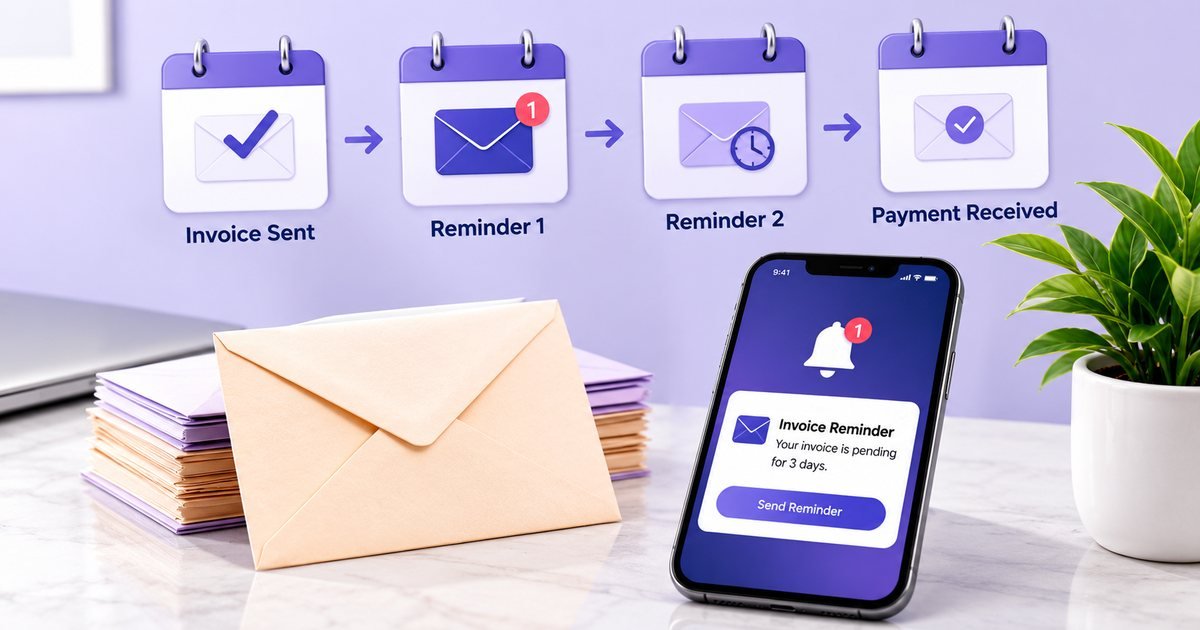
A simple follow-up timeline
- Before the due date (3 to 5 days): a friendly heads-up that the invoice is coming due.
- On the due date: a short note if payment has not arrived.
- 3 to 7 days after: a clear reminder that the invoice is overdue, with the invoice attached again.
- 14 days after: a firmer message asking for payment or a payment date, and mentioning any late-fee terms you agreed.
- 30 days after: a final notice, and a phone call if you have not spoken yet.
Adjust the days to your payment terms, but keep the pattern: friendly first, firmer later.
What to include in every reminder
- The invoice number, date, amount and due date.
- A copy of the invoice attached again.
- How to pay, with the bank details or payment link repeated.
- A clear request: payment by a specific date, or a reply if there is a problem.
Example wording
Before the due date: "Hi Sam, a quick note that invoice INV-0042 for 1,200 is due on 24 October. I have attached a copy for your records. Please let me know if you need anything from me."
Just after the due date: "Hi Sam, I noticed that invoice INV-0042 is now a few days past its due date. A copy is attached. Could you let me know when I can expect payment?"
Firm reminder: "Hi Sam, invoice INV-0042 for 1,200 is now 14 days overdue. Please arrange payment by 7 November. If there is an issue with the invoice, please tell me so I can fix it. As agreed in our terms, a late fee may apply to balances that remain unpaid."
Tips for a professional tone
- Stay polite and factual. Avoid blame or anger. Stick to dates, amounts and next steps.
- Be specific. Ask for payment by a particular date rather than "soon".
- Use the right channel. Start with email, then call if there is no reply. A personal call often unblocks things.
- Contact the right person. If your contact is not the one who pays, ask for the accounts team.
- Keep a record. Note every message and reply, in case you need them later.
If there is a dispute
If the client questions an item or says the work was not as agreed, listen first and try to resolve it. Offer to correct the invoice if there is a genuine mistake, and consider a partial payment for the undisputed amount while the rest is settled.
When a client still does not pay
If reminders fail, you can pause further work, apply late-fee terms you agreed, offer a payment plan, or use a collection process. Your options depend on your contract and local law, so seek professional advice before taking formal steps. Our guides on overdue invoices cover the next stages in more detail.
Make follow-up easier
Our free invoice generator shows an invoice as overdue once the due date passes, so you can see at a glance which ones need a reminder. Send invoices with a clear due date and payment details, and follow up on a regular schedule.