A packing slip is the list inside the box. It tells the person unpacking it what should be there, so they can check the delivery before they sign off or start using the goods. It is one of the simplest documents in business, and one of the easiest to get wrong. Here is what it should contain and how it differs from the documents around it.
What a packing slip is
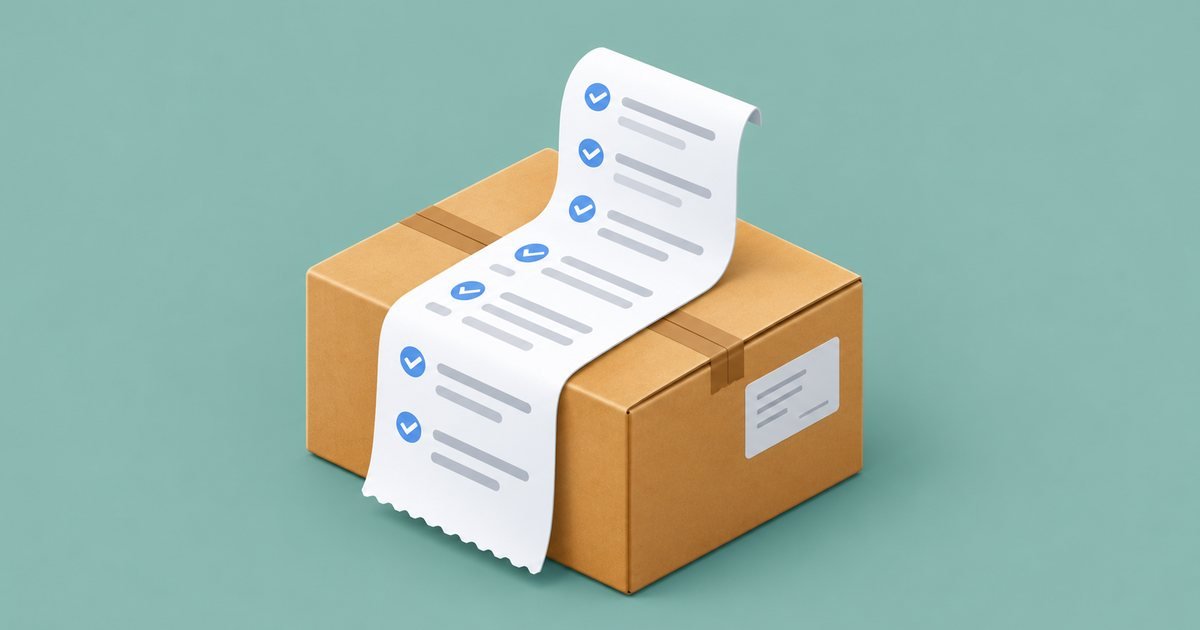
A packing slip, sometimes called a delivery note or packing list, accompanies a shipment. It lists the items in a particular package, with their quantities, and links them to an order. Unlike an invoice, it usually shows no prices. Its job is to confirm contents, not to request payment.
Packing slip, invoice and bill of lading
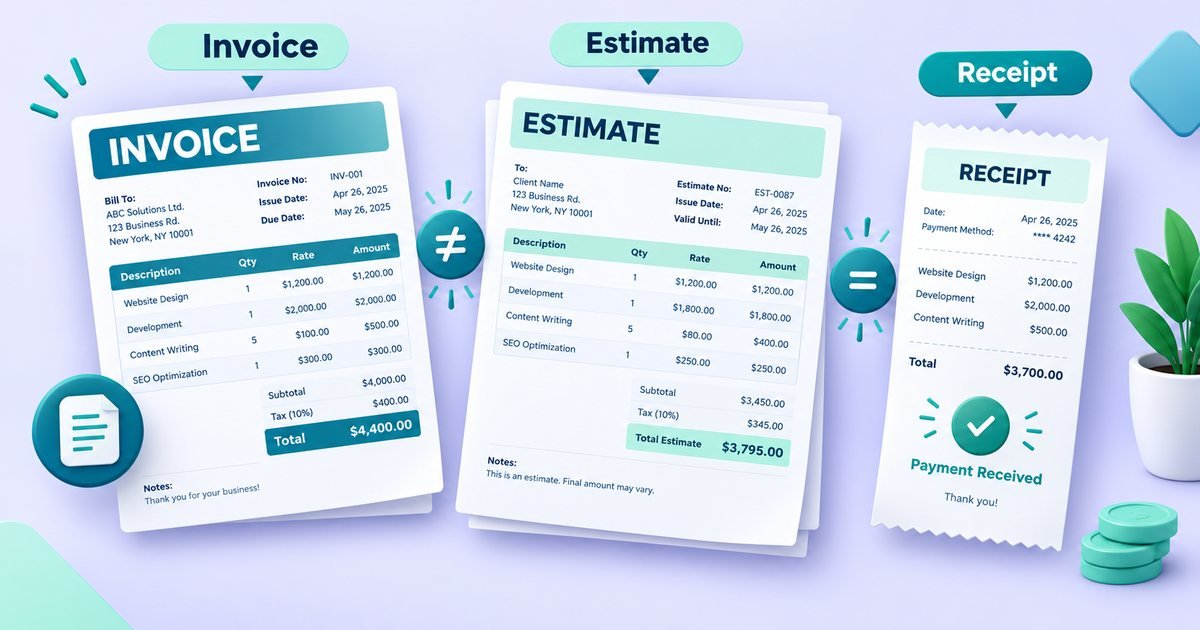
An invoice asks for payment and shows prices and tax. A packing slip lists what is physically in the box. A bill of lading is the carrier's receipt and transport contract, issued by the shipping company. The three often travel together on a large shipment, each with a different purpose. In some countries a "delivery note" that the recipient signs is used instead of, or as well as, a packing slip.
What to include
- Your company name and address.
- The customer's name and delivery address.
- The order number, and the package or slip number.
- The order date and the shipment date.
- A description of each item, with any SKU or product code.
- The quantity ordered and the quantity shipped.
- Notes, such as handling instructions or a return address.
Ordered versus shipped
These two columns are the most valuable part. If a customer ordered 10 units but you could only ship 8, the slip shows 10 ordered and 8 shipped, so the 2 outstanding are visible and not a surprise. It also tells the customer to expect a follow-up shipment. Without both columns, a short delivery looks like a mistake.
Several boxes, one order
When an order ships in more than one package, create a slip for each, with the same order number and its own package number, such as PS-001 and PS-002. Say on each how many packages the order has, so that the customer knows to wait for the rest. An order-level summary helps your own team check that everything went out.
Where to put it
Place it inside the package, ideally on top of the contents or in a plastic pouch attached outside, away from the shipping label. A slip that is hidden at the bottom of the box tends to be found after the customer has already started unpacking, which is exactly when it is no use. Do not cover the carrier's label or barcode with it.
How it helps you
A good slip reduces disputes. If a customer claims an item was missing, you can see what you said you sent. It helps your returns process, since the customer can quote the order and slip numbers and the items in question. It also helps your warehouse team check an order against the list before sealing the box.
For business customers
Companies often receive goods through a goods-in process, where someone checks the delivery against the purchase order and the packing slip, then records the receipt. The supplier's invoice is then matched against it. Include the customer's PO number on the slip and the supplier's code for each item, and you will make that process quicker. Our guide on purchase orders shows how the documents connect.
International shipments
A packing slip does not replace customs paperwork. International parcels usually need a commercial invoice and sometimes other forms, depending on the destination. Check the requirements with your carrier or customs authority before you ship.
Common mistakes
Using the wrong order, leaving out the shipped quantity, putting prices on the slip when the customer is not meant to see them (for example, in a gift or drop-shipped order), shipping without a slip because the order was urgent, and not keeping a copy. Keep a record of every slip you send.
Before you seal the box
A quick check prevents most problems. Make sure the order number on the slip matches the one on the shipping label. Count the items against the slip, check sizes and colours, and place the slip where it will be seen. For high-value orders, a photo of the contents before sealing gives you evidence if a dispute arises.
Gifts and drop-shipped orders
If the parcel is a gift, leave the prices off the slip and consider adding a short message instead. If you ship on behalf of another brand, use a neutral slip, or one in their name where you are permitted to, so the recipient does not see your supplier details.
Create one in minutes
Our free packing slip generator lets you add both quantities, a package number and notes, then download a PDF or print it. If you are labelling parcels as well, see the shipping label generator. This guide is general information, so check requirements for your country and carrier.