A receipt is the smallest document in business and one of the most useful. It is proof that money changed hands, and it protects both sides: the customer can show they paid, and you can show you were paid. Here is what a good receipt contains, when to issue one and how it fits with your invoices.
What a receipt is
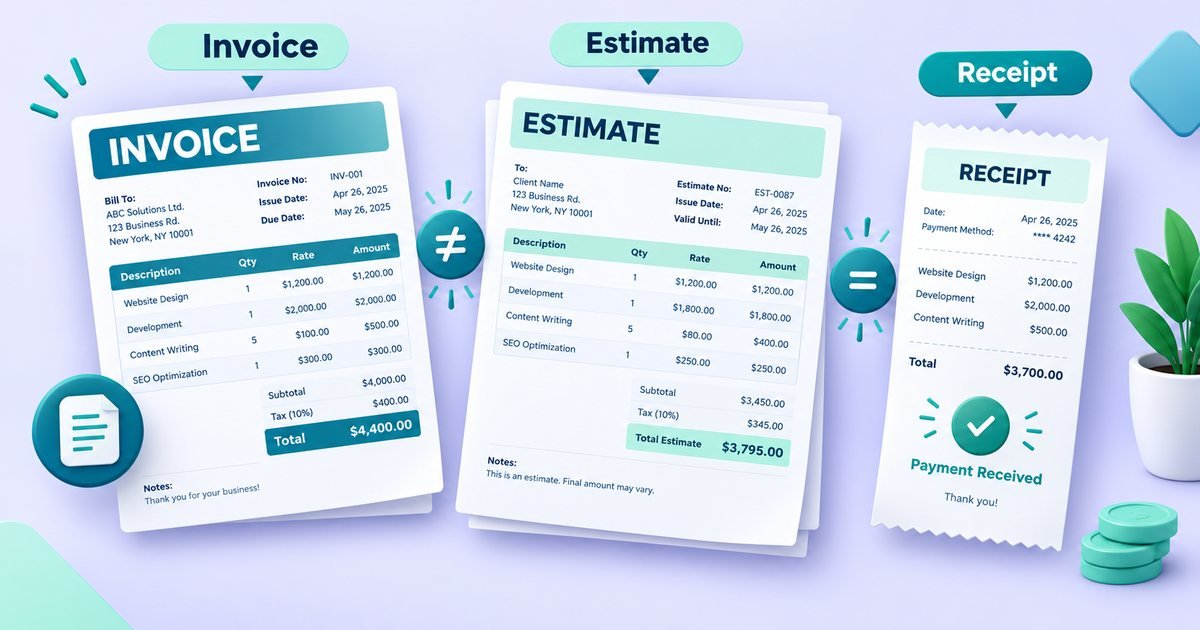
A receipt confirms that a payment has been received. It states who paid, how much, when, how and what for. It is issued after payment, which separates it from an invoice, a request for payment that comes before. Our guide on invoices, receipts and estimates shows how the three relate.
When to issue one
Issue a receipt as soon as you receive payment, whether it comes in cash, by card, by bank transfer or through an online service. Some customers will ask for one, and some countries require sellers to provide one, particularly for retail sales, so check the rules where you work. Even when it is not required, a receipt prevents arguments about whether something was paid.
What to include
- The word "Receipt" and a unique receipt number, such as RCT-0001.
- The date of payment.
- Your business name and address, and your tax number if you are registered.
- The payer's name, where relevant.
- A description of what the payment was for.
- The amount received, with any tax shown separately.
- The payment method.
- The invoice number the payment relates to, if there is one.
A simple retail example
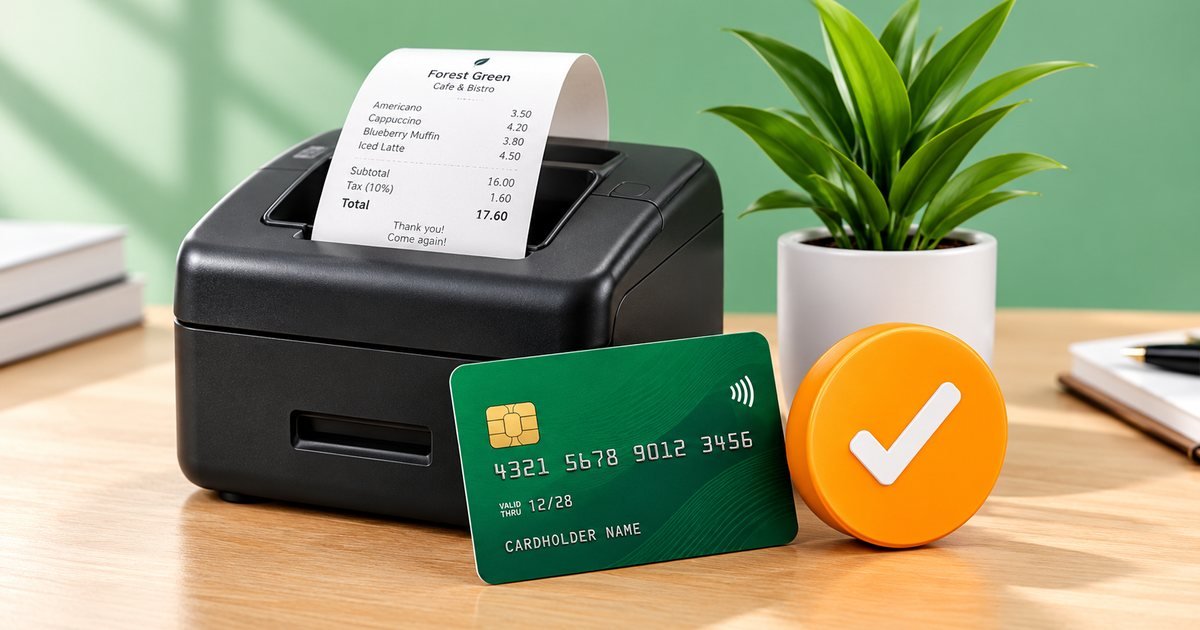
A customer buys 3 items at 12.50 each, which is 37.50. Sales tax at 8% adds 3.00, so the total is 40.50. They pay with a 50.00 note and receive 9.50 in change. The receipt lists the items, the tax, the total of 40.50, the payment method as cash and the amount tendered. Nothing more is needed, and it takes seconds to produce.
Receipts for invoice payments
When a customer pays an invoice, the receipt should refer to it. Say an invoice for 1,440 is partly paid with a deposit of 500. The receipt records that 500 was received on a given date against that invoice, and the balance of 940 is still due. Showing the balance avoids confusion later, and the same applies to each instalment. In our free invoice generator, the Amount paid field produces exactly that information.
Receipt, invoice and proof of payment
An invoice requests payment and is issued by the seller. A receipt confirms payment and is also issued by the seller. A proof of payment, such as a bank transfer confirmation, comes from the payer's bank and shows money was sent, but it does not say what it was for. Many customers want a receipt even if they hold proof of payment, because it links the payment to the goods or services.
Numbering and records
Use a separate, running sequence for receipts, such as RCT-0001, RCT-0002, so that none are missing and none are duplicated. Keep a copy of every receipt, and store them alongside the related invoices. Retention rules for business records differ by country and are often several years, so ask your accountant what applies to you.
Tax on receipts
If you charge sales tax or VAT, show the tax amount separately and your tax number where required. A receipt that includes tax details can often be used by a business customer to reclaim tax, so accuracy matters. Rules vary by country and by type of sale, so confirm what applies to you.
Refunds
A receipt confirms a payment received. If you later refund the customer, record the refund separately, and where required issue a credit note or refund document. Do not change or delete the original receipt. Our guide on credit notes covers how to document corrections.
Digital or paper
A PDF sent by email is usually fine and is easy for both sides to store. For in-person sales, a printed or emailed receipt both work. If a customer asks for a paper copy, provide one. Consider keeping an automatic copy in a folder organised by month.
Common mistakes
The usual errors are leaving out the date or the payment method, not saying what the payment was for, forgetting to link it to an invoice, issuing duplicate receipt numbers, and issuing a receipt before the money has actually arrived. Wait until a bank transfer has cleared before confirming it.
Sample wording
A simple receipt can read like this: "Receipt RCT-0012. Date: 12 November. Received from Sam Taylor the sum of 500.00 as a deposit against invoice INV-0042, total 1,440.00. Payment method: bank transfer. Balance outstanding: 940.00. Thank you." It is short, but it answers every question the customer or an auditor is likely to ask.
If a customer loses a receipt
Issue a duplicate that is clearly marked "copy" and carries the original number, rather than creating a new receipt with a new number. Keep a note that a copy was issued. A new number would suggest a second payment, which could cause confusion in both sets of records.
Make one in a minute
Our free receipt generator lets you add your details, list what was paid for and download a PDF. Fill in the Amount paid to show the payment and any balance, and use the notes to record the payment method. This guide is general information, not tax or legal advice.