Getting paid only at the end of a project is risky for the person doing the work. Deposits and milestone payments spread the risk: you are paid as the project moves forward, and the client stays involved and committed. Used well, they improve cash flow and prevent a lot of awkward conversations.
Why ask for money upfront
A deposit does three things. It covers your early costs, such as materials or time already booked out. It shows that the client is serious, and it reduces the chance of a project being cancelled halfway. It also gives you a small buffer before the real work begins. For clients you have not worked with before, it is especially useful.
How much to ask for
There is no fixed rule. Many freelancers and contractors ask for somewhere between 25% and 50%, depending on the size of the job and how much it costs them to get started. Where you must buy materials or reserve time that you could otherwise sell, a higher deposit is easier to justify. If a client resists, a smaller deposit with shorter stages afterwards is better than none.
Deposit, retainer and prepayment
A deposit is a part-payment of an agreed price, held against the job. A retainer pays for ongoing availability or a regular amount of work, usually monthly. A prepayment is when the client pays in full in advance, common for small or digital goods. Be clear in your wording which one you mean, since they have different expectations.
Milestone billing in practice
Split the price into stages tied to something the client can see. For a 6,000 project, you might invoice 30% on signing, which is 1,800, 40% when the first full draft or prototype is delivered, which is 2,400, and the final 30%, another 1,800, on completion. Because the stages are tied to deliverables rather than dates, both sides know what has to happen for the next invoice to be issued.
Writing it into the agreement
Put the schedule in the quote or contract: what each milestone is, what percentage is due, and how many days the client has to pay after each invoice. Add what happens if a stage is delayed by the client. A simple clause such as "If delivery of materials or approvals is delayed by more than 14 days, the next payment becomes due" prevents projects from stalling with your money still outstanding.
Refunds and cancellations
Decide in advance what happens if the client cancels. Often the deposit covers the work already done or the time reserved, and some of it may be non-refundable. How far that can be enforced depends on local law and on who the customer is, with consumers usually protected more strongly. State your policy clearly, and have an accountant or lawyer check the wording if the amounts are large.
Invoicing each stage
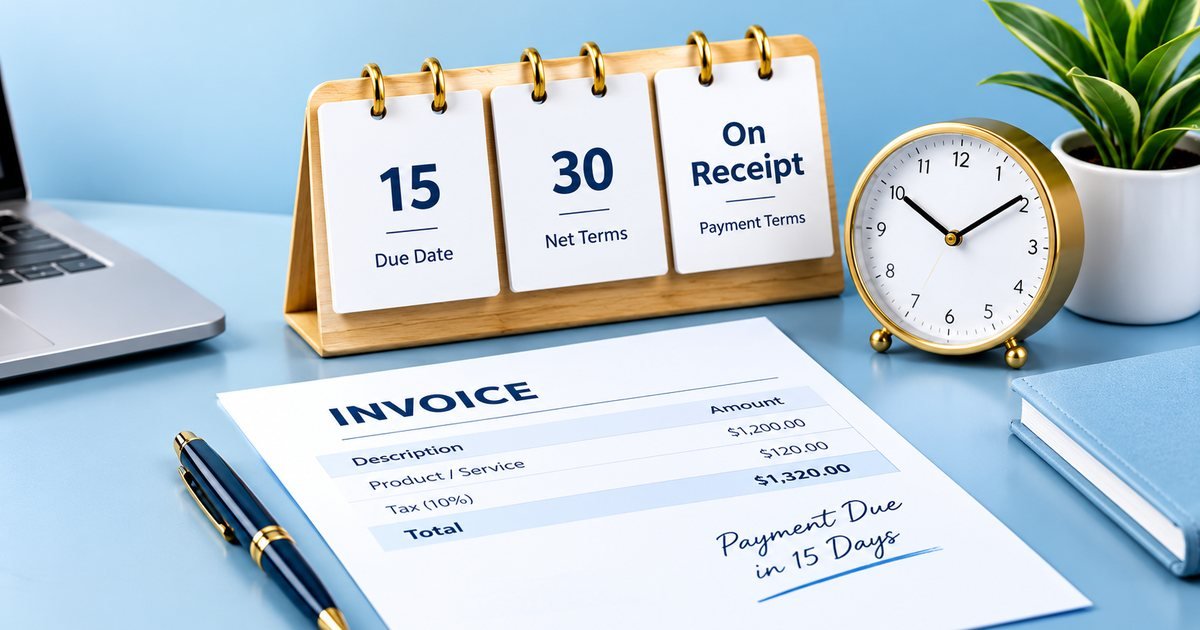
Send a separate invoice at each milestone, with clear terms, such as payment on receipt or within 7 days, since each is smaller than a final bill. On the last invoice, show what has already been paid, so the client sees the balance rather than the total. In our free invoice generator, the Amount paid field does exactly that.
Deposits in your accounts
A deposit is money you have received for work not yet done. Many accounting systems treat it as an advance or a liability until the work is delivered, rather than as income straight away, and tax treatment differs by country. Ask your accountant how to record it.
Common mistakes
Vague milestones that depend on opinion rather than a deliverable cause arguments. Others include forgetting to invoice promptly when a stage is finished, accepting delays without adjusting the schedule, and doing the next stage before the previous one is paid. If a stage invoice is overdue, consider pausing work, as your contract allows. Our guide on invoice follow-up shows how to ask without friction.
Wording for your quote
Keep the payment section short and specific: "A deposit of 30% (1,800) is due on acceptance, and work begins when it is received. A further 40% (2,400) is due when the first draft is delivered, and the remaining 30% (1,800) on completion. Each invoice is payable within 7 days." The client sees the whole schedule before agreeing, so no invoice comes as a surprise.
When a client pushes back
Some clients will say they never pay upfront. A calm answer is usually the best: explain that the deposit reserves your time and covers early costs, and offer something in return, such as a smaller percentage with shorter stages. You can say something like, "I can reduce the deposit to 20% if we invoice at each milestone." You keep the principle, and the client keeps some flexibility. If they still refuse any upfront payment on a large project from a company you do not know, think carefully about whether to take it on.
Do not let the schedule drift
A milestone plan only works if you follow it. Invoice on the day a stage is delivered, not at the end of the month, and do not start the next stage while the last invoice is unpaid and overdue. Small lapses repeated over a project can leave you funding it yourself.
Bring it together
Agree the schedule in writing, take a deposit, tie each payment to a visible deliverable and invoice the moment it is reached. See how to get paid faster and payment terms explained for more. This guide is general information, not legal or financial advice.