Chasing late payments is reactive. Reducing them means looking at why they happen and changing a few things upstream, before the invoice is even written. Our other guides cover reminders and follow-ups. This one is about prevention: the choices that make late payment less likely in the first place.
Work out what late payment costs you
It helps to put a number on it. Suppose 12,000 is owed to you and arrives 45 days late. If you cover the gap with borrowing at 10% a year, that delay costs roughly 12,000 × 10% × 45 ÷ 365, which is about 148. That is before counting the time spent chasing, or the opportunities you passed up because the money was not there. Once you can see the cost, it is easier to justify firmer terms or a deposit.
Measure how late you really are
A useful figure is days sales outstanding, or DSO: the average number of days it takes to collect payment. A simple version is receivables divided by credit sales, multiplied by the number of days in the period. If you invoiced 30,000 over the last month and 36,000 is currently outstanding, DSO is 36,000 ÷ 30,000 × 30, or 36 days. On Net 30 terms, that means you are waiting about six days longer than you planned. Track it monthly and you will see whether things are improving.
An ageing report goes a step further. List every unpaid invoice in groups: not yet due, 1 to 30 days overdue, 31 to 60, and over 60. It shows at a glance which invoices need action and which clients are the repeat offenders.
Understand why payments are late
Late payers tend to fall into a few groups. Some forget, or never received the invoice. Some are waiting for an internal approval or a PO number. Some dispute part of the invoice. Some are short of cash. And a few simply pay late because nobody has ever objected. The cure differs for each: better invoicing and reminders for the first, clearer references for the second, a quick conversation for the third, and a payment plan or shorter terms for the fourth.
Choose clients and terms with care
Not every client deserves the same terms. For a new client, you can ask for a deposit or payment on receipt for the first project, then relax the terms once they have paid on time. For companies, it is reasonable to ask for a purchase order, a named accounts contact and their usual payment run date. If a prospective client asks for 90-day terms on a small job, you can decline, charge more, or ask for staged payments.
Put the terms in writing early
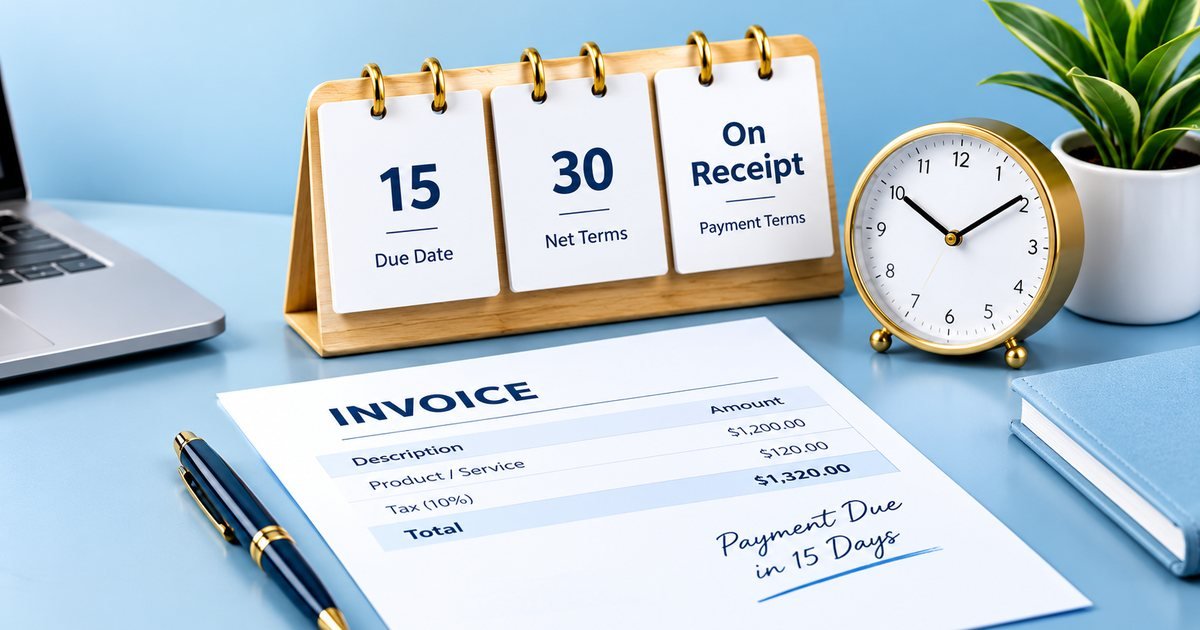
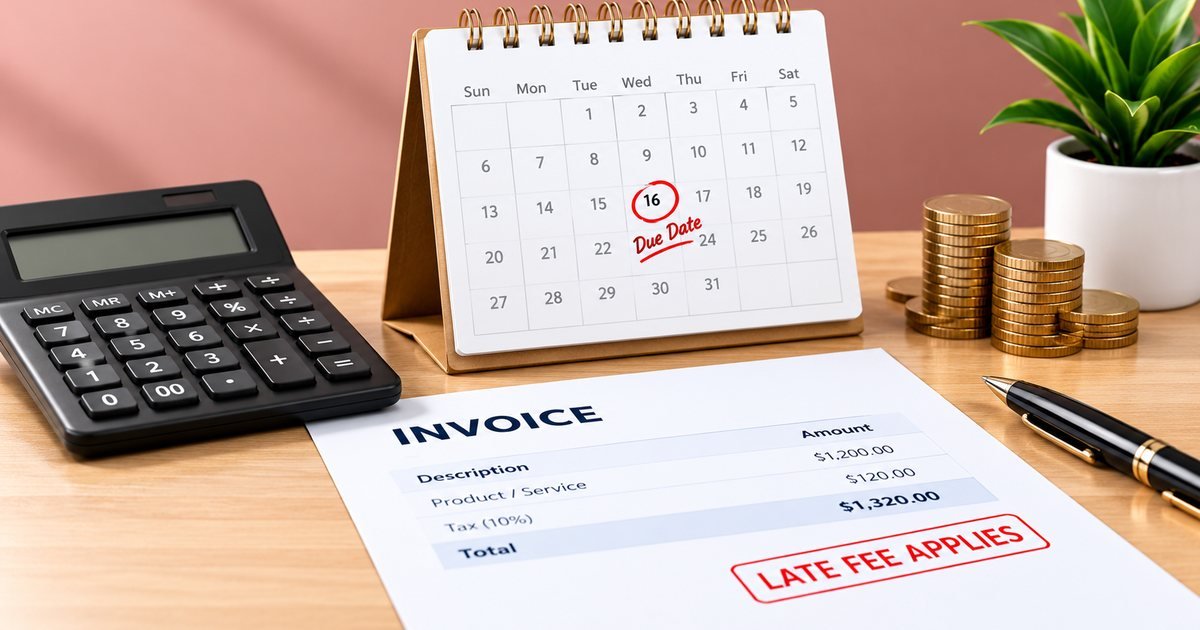
Terms agreed in a quote or contract are much easier to enforce than terms invented on the invoice. Include the due date, the amount, how to pay, and what happens if payment is late. Our guide on payment terms shows the options, and late fees covers charging for delays.
Make the invoice easy to approve
Many delays happen because the invoice cannot be matched to anything. Put the PO number and project name on it, describe the work precisely and send it to the person who pays. Our guide on creating an invoice covers the details, and a clear invoice removes the most common excuse.
Automate the reminders
Reminders work best when they are routine and not personal. Put three dates in your calendar for every invoice: a few days before the due date, the due date and a week after. If you use accounting software with automatic reminders, switch them on. If you do it by hand, a saved email template makes the task take a minute.
Make paying effortless
The fewer steps between the client and the payment, the faster it happens. Include bank details or a payment link, use the invoice number as the reference, and accept the methods your client already uses. For international clients, state the currency and say who bears transfer fees.
Do not rely on one client
If a single late client can put your business in trouble, the problem is concentration, not payment behaviour. Spread your work over several clients where you can, and keep a cash cushion that covers at least a month of costs. A buffer turns a late payment from an emergency into an inconvenience.
Know when to stop
Everyone has a client who is always late. When reminders, firmer terms and a direct conversation fail, you have three choices: keep them on stricter terms, require payment upfront, or part ways. Working for a client who consistently pays late is a hidden discount, because you are financing their business at no charge.
A short checklist for new clients
Before work starts, confirm the client's legal name and billing address, the email address of their accounts team, whether they need a purchase order, the payment terms, the payment method and who approves invoices. Write it on a single page and keep it with the contract. It takes ten minutes and removes many of the usual reasons for delay.
Start with one change
You do not need to change everything. Pick the most useful step: track DSO, ask for a deposit on larger jobs, add due dates and PO numbers to every invoice, or set your reminders. Our invoice generator marks an invoice as overdue when the due date passes, which makes the first of those easy. This guide is general information, not financial advice.