People use "invoice" and "bill" as if they were the same thing, and in daily speech they often are. In accounting, though, the two words describe the same document seen from opposite sides of a transaction. Knowing which side you are on changes how you record it, when you act on it and what you should check.
One document, two points of view
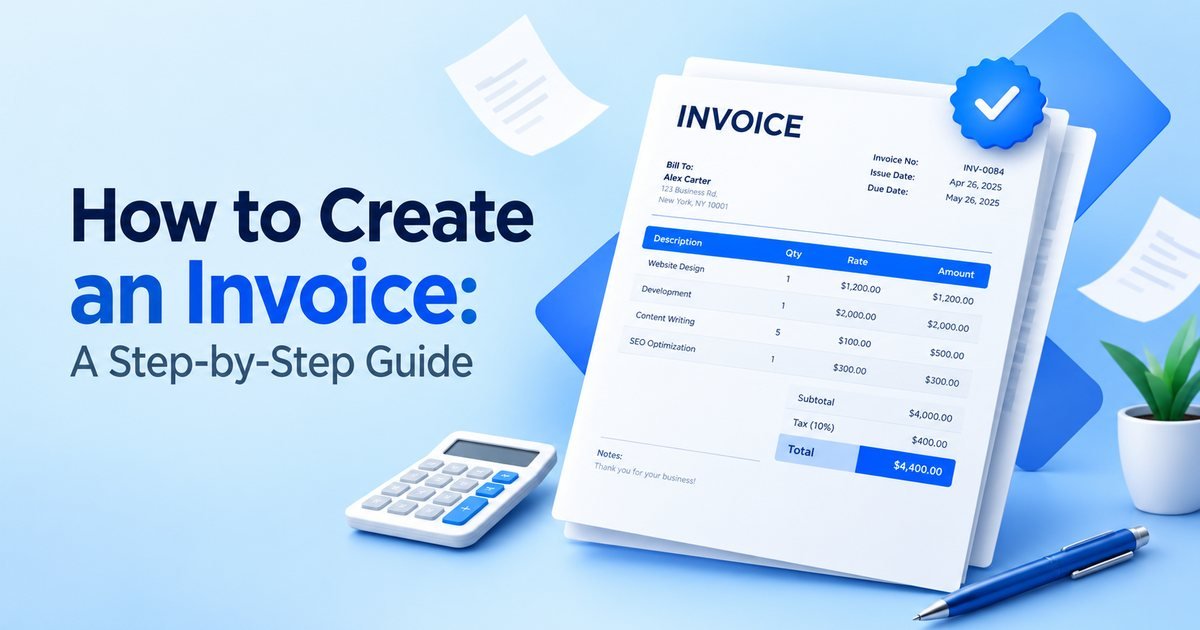
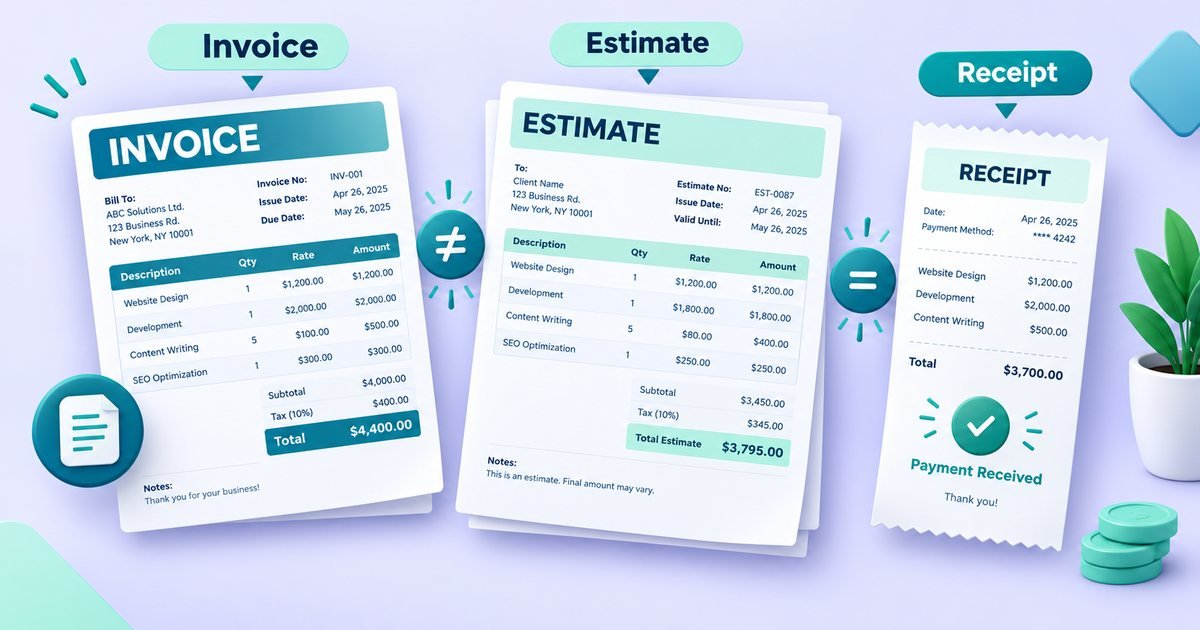
When you sell something, you send an invoice. Your customer receives it, and in their books it is a bill. The same piece of paper, with the same invoice number and the same amount, is an invoice for the seller and a bill for the buyer. The seller records it as money owed to them, called accounts receivable. The buyer records it as money they owe, called accounts payable.
What this means in practice
If you create the document, you are in charge of getting it right and getting it paid. Our guides on creating an invoice and getting paid faster cover that side. If you receive it, your job is different: to check it, approve it and pay it on time, not early and not late. Treating the two sides as separate routines helps you keep your records tidy.
Handling a bill you receive
A sensible routine for incoming bills has five steps. Record it when it arrives, with the supplier's invoice number, date, amount and due date. Check it against what you ordered and what you received. Get it approved by whoever authorised the spend. Schedule it for payment on the due date. Then mark it paid and file it. For larger purchases, matching the bill to a purchase order and a delivery record before paying avoids mistakes. Our guide on purchase orders explains this.
Pay on time, not early
Paying a bill the day it arrives often costs you cash for no benefit. Unless there is a discount, schedule payment for the due date. If a supplier offers 2% off for payment within 10 days on Net 30 terms, paying 20 days early to get that 2% is worth roughly 37% a year, which is attractive if you have spare cash, and expensive if you must borrow to do it. Work out which applies before you decide.
A worked example
Your supplier sends invoice 8841 for 2,616, due in 30 days. In your books that is a bill. You check it against your purchase order and the delivery note, find that all items arrived and the price is right, and record it with the due date. A week before the due date it is included in your payment run, and you pay it, reference 8841. If the delivery had been short, you would ask the supplier for a credit note before paying the full amount.
Common problems with bills
Duplicate payments happen when the same invoice arrives twice by different routes, or when a reminder is mistaken for a new bill. Check the invoice number before paying. Another is paying a bill that does not match the order, which is harder to recover later. And a third is losing track of due dates, which leads to late fees and strained relationships with suppliers.
Disputed bills
If something looks wrong, contact the supplier promptly, in writing, explaining exactly what you disagree with. You can pay the undisputed part and hold the rest while it is resolved, if your agreement allows it. Keep any emails. A corrected invoice or a credit note is the proper way to resolve an error. See our guide on credit notes.
Bills versus expenses
A bill is a request for payment from a supplier. An expense is a cost that you record in your accounts. A bill that you have received for a business cost becomes an expense, but you may record the expense when you receive the bill, and the payment later, depending on your accounting method. Small payments made by staff and reclaimed from the business are expenses without a supplier bill, and are usually handled through an expense report. Our expense report generator helps with those.
Bills and your cash flow
Your bills and your invoices together shape your cash. Money owed to you arrives later than you would like, and money you owe leaves on a schedule. If you can get paid in 14 days while paying suppliers in 30, you are using other people's money. If it is the other way round, you will need a cash cushion. A simple calendar of what is due in and out over the next 60 days is one of the most useful tools a small business can have.
In short
An invoice is what you send, and a bill is what you receive. Same document, opposite jobs. For your own invoices, our free invoice generator does the work. This guide is general information, not accounting advice.